What We Do

Services

Everything we pour, form, and fix, from a small sidewalk section to a full driveway.

HomeServices

Everything we take on

Every job below is one we do ourselves across Bossier City.

Concrete Driveways

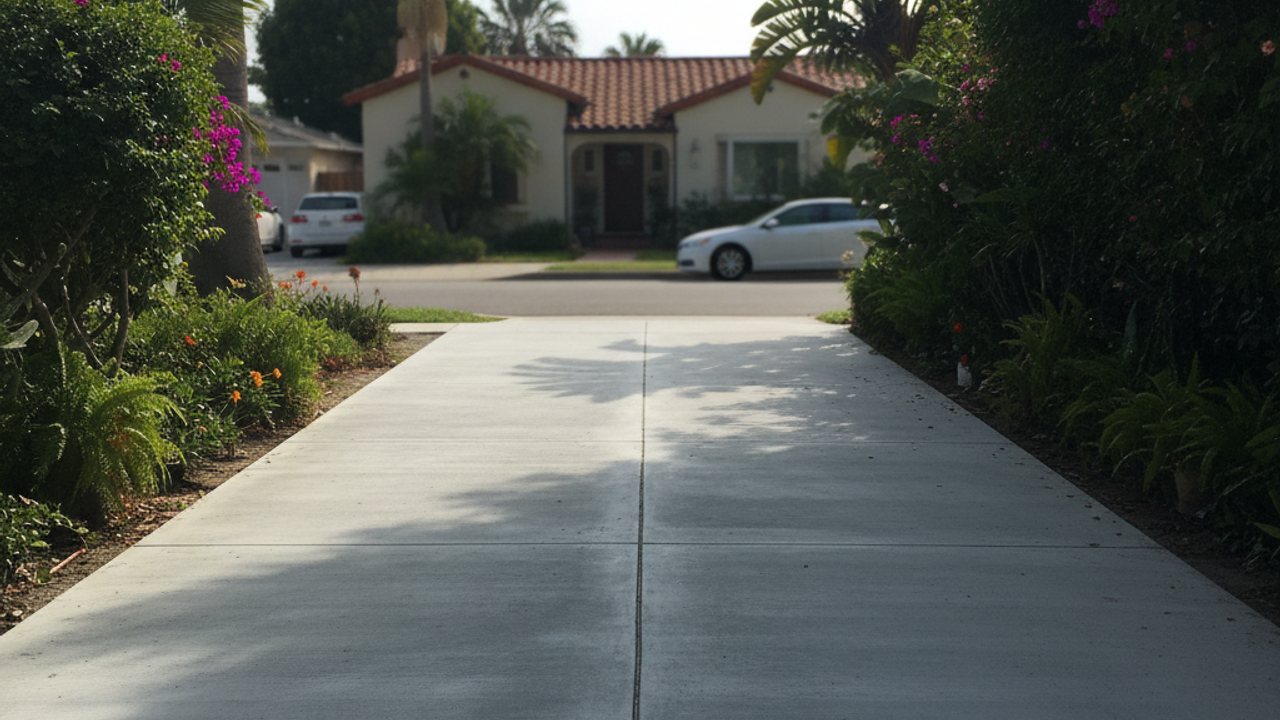
A driveway takes more abuse than almost any slab on your property, tires turning the same spot, trucks, trailers, and every drop of runoff from your roof. We pour a minimum 4-inch slab over a compacted base, usually a 3500 to 4000 PSI mix depending on what's parking on it, and cut control joints roughly every 8 to 10 feet so the crack goes where we put it instead of down the middle.

Concrete Patios

Patios don't carry the weight a driveway does, but they sit under standing water, furniture legs, and years of Louisiana sun. We slope every patio away from the house, about a quarter inch per foot, so water runs off instead of pooling at your back door.

Stamped Concrete

Stamped concrete gets you the look of flagstone, brick, or slate without individual pieces that shift or grow weeds between them. We color and texture the slab while it's still plastic, then seal it once it cures, and the pattern goes as deep as the stamp mats we use.

Concrete Slab Foundations

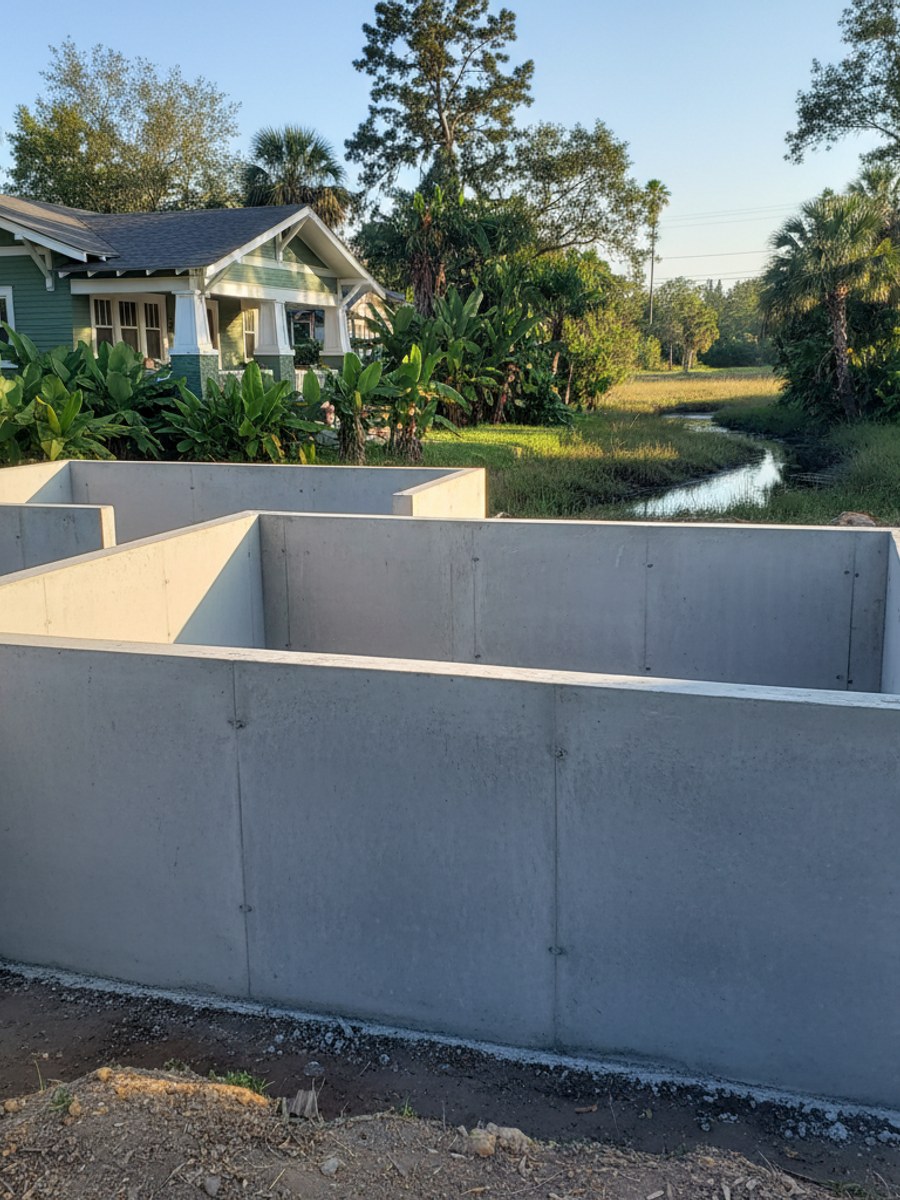
Sheds, garages, additions, workshops, all of it needs a flat pad that isn't going anywhere. We put down a gravel base, add a vapor barrier where moisture is a concern, and reinforce with rebar or wire mesh depending on the load it'll carry.

Concrete Repair

Not every crack means you need a whole new slab. We fix trip hazards, spalling, and settling with mudjacking or a full section replacement, whichever actually solves the problem instead of patching over it for a year.

Concrete Sidewalks

A sidewalk that heaves is almost always a tree root or a soil problem, not a bad pour. We cut out the affected section, deal with what's underneath it, and dowel the new concrete into the old so you don't end up with a lip to trip on.

Concrete Steps & Porches

Steps take a different kind of stress than a flat slab, foot traffic concentrated on a few square inches at every edge. We form and pour steps with a broom finish for grip, and we keep the rise and run consistent so nobody catches a toe.

Concrete Pool Decks

Pool decks stay wet, so the finish matters as much as the pour. We use a broom or knockdown texture that stays walkable barefoot even soaked, and we slope it away from the pool so runoff doesn't wash back in.

Concrete Resurfacing

If your slab is solid underneath but ugly on top, pitted, faded, stained, resurfacing is often cheaper than tearing it out. It's a thin overlay, so it only makes sense on concrete that isn't cracked through or actively settling.

Retaining Walls

Clay soil holding water pushes hard against anything trying to keep it in place. We build retaining walls with drainage behind them, gravel and pipe, so the wall is holding back dirt and not a bathtub full of rainwater.

How It Works

Four steps, and no surprises in any of them.

01

We come and look

You tell us what you want doing, we look at what is actually there, and we ask the awkward questions early.

02

You get a price

In writing, itemised, free. If something might add cost later we flag it now rather than at the end.

03

We do the work

Same crew throughout. We cover your floors, keep the dust down and tidy up before we leave each day.

04

We walk it with you

You point out anything you are not happy with and we fix it before the invoice, not after.

Where We Work

All of this, across Bossier City, LA

Coverage runs from Bossier City out through Shreveport and the smaller towns in between.

Bossier City, LA
Shreveport, LA
Marshall, LA
Minden, LA
Haughton, LA
Springhill, LA
Greenwood, LA
Benton, LA
Vivian, LA
Stonewall, LA
Waskom, LA
Common Questions

Things worth asking

Questions that come up once a concrete project is actually underway.

Do I need a permit to pour a concrete driveway or patio?
Permit requirements for concrete work depend on the size of the project and local code in Bossier City or the surrounding parish. Driveway replacements often don't need one, but additions tied to a structure usually do.
How long does a typical concrete pour take?
A standard driveway or patio pour usually takes one to two days of actual work, forming one day and pouring and finishing the next. The concrete then takes about a week before it can handle vehicle weight and closer to 28 days to fully cure.
Can concrete work be done on a tight budget?
A plain broom-finish slab costs less than stamped or colored concrete, and reducing the footprint or skipping decorative edges brings the price down further. Discussing budget upfront lets the estimate reflect what actually matters instead of guessing.
Do you guarantee your concrete work?
Concrete work is guaranteed against defects in the pour and finish, such as improper curing or cracking tied to workmanship. Cracking caused by soil movement, tree roots, or damage after the job is complete falls outside that guarantee.
Who will I be dealing with during the concrete project?
One crew handles the job from forming to finishing, so the same people setting the forms are the ones running the trowels. Questions during the job go to whoever's running the crew on site that day.
What kind of concrete mix and reinforcement do you use?
Driveways typically get a 3500 to 4000 PSI mix with rebar or wire mesh reinforcement, depending on the load the slab will carry. Patios and walkways usually run a lighter 3000 PSI mix since they don't take vehicle traffic.
Can I stay in my house while concrete work is being done?
Living in the house during a concrete pour isn't a problem since the work happens outside, but expect a truck, forms, and equipment in the driveway or yard for a couple of days. Parking may need to move to the street until the new concrete cures enough to drive on.
What do I need to do to prepare for a concrete pour?
Clearing vehicles, furniture, and anything breakable away from the pour area is the main thing to handle beforehand. Sprinkler lines, gas lines, or anything buried near the work area should be pointed out ahead of time so it doesn't get cut during excavation.
What if you find a problem once you start digging or removing old concrete?
Soft soil, old buried debris, or a broken drain line sometimes turns up once excavation starts, and that gets flagged before pouring continues. Any change to scope or cost gets discussed and agreed on before the concrete truck is called.
How should I take care of new concrete after it's poured?
New concrete takes roughly a week before it can handle vehicle weight and closer to a month before it reaches full strength. Sealing a driveway or patio every couple of years helps it resist staining and the moisture cycles common to Louisiana weather.

Not sure what you need?

Describe the problem and we will tell you what it probably is. No obligation.
Call (318) 620-4965